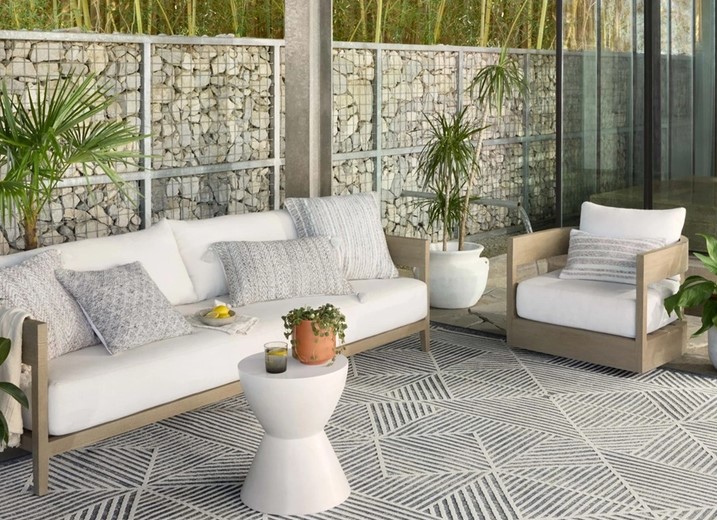
Back in 2018, I received an urgent call from a homeowner who had just spent $22,000 expanding his backyard composite deck. He had installed high-end outdoor furniture, built a custom pergola, and picked out premium lighting. Yet, standing in the doorway, the whole space felt cold, disjointed, and surprisingly industrial. It looked like a showroom display dropped onto a timber platform rather than a welcoming living space.
The fix didn’t require another $5,000 structural addition. We spent under $400 on two high-grade polypropylene textile floor coverings tailored for weather resistance. The moment we rolled out those outdoor rugs, the entire deck transformed instantly. It anchored the seating area, masked structural board seams, and created a warm, cohesive outdoor room.
That project reinforced a crucial exterior design principle: your outdoor flooring sets the visual baseline for your property’s exterior identity.
Whether you are looking to elevate a residential patio, dress up a rental deck, or curate a commercial outdoor seating venue, integrating high-durability floor textiles is one of the fastest, most cost-effective upgrades available.
Here is my deep-dive field guide on how to choose, install, and maintain these versatile exterior assets.
Synthetic Fiber Physics: Why Indoor Rugs Fail Outside
To understand why specialized performance textiles are non-negotiable outside, think of an indoor rug like a cotton bath towel and a synthetic performance rug like a high-tech rain jacket.
Indoor natural fibers like wool, jute, or regular cotton act like sponges. Place them outside, and moisture gets trapped inside the core threads. Within days, organic mold, mildew, and rot break down the backing, while direct sunlight bleaches the dyes into a dull gray.
INDOOR NATURAL FIBER (Absorbs & Degrades)
Rain/Humidity ---> [ Absorbed into Thread Core ] ---> Mold, Rot, Structural Failure

OUTDOOR SYNTHETIC FIBER (Repels & Resists)
Rain/Humidity ---> [ Moisture Runs Off Surface ] ---> Quick-Drying, Hydrophobic Defense
Modern outdoor rugs utilize advanced extruded synthetic polymers engineered specifically to withstand environmental weathering.
Key Material Polymer Profiles
-
Polypropylene (Olefin): The industry gold standard. Olefin is inherently hydrophobic (absorbs virtually zero water), highly stain-resistant, and can even be cleaned with diluted bleach solutions without losing color.
-
Solution-Dyed Acrylic: Offers an incredibly soft, wool-like texture. Because color pigments are infused directly into the liquid polymer matrix before the fibers are extruded, it provides exceptional resistance to UV fading.
-
Recycled PET (Polyethylene Terephthalate): Engineered from post-consumer plastic bottles. PET delivers remarkable tensile strength, eco-friendly credentials, and smooth underfoot comfort.
Technical Performance Breakdown: Material Comparison
Choosing the wrong textile backing or weave structure for your climate will lead to premature degradation. Here is how the most common materials perform in field conditions:
| Textile Material | UV Fade Resistance | Moisture & Mold Resistance | Traffic Durability | Cleanability |
| Solution-Dyed Polypropylene | Exceptional (1,000+ UV Hours) | Superior (Quick-drying) | Very High | Excellent (Bleach Safe) |
| Solution-Dyed Acrylic | Superior | High | High | Good (Mild soap/water) |
| Recycled PET Plastic | High | Superior | Moderate to High | Excellent |
| Natural Jute / Sisal | Very Poor (Fades rapidly) | Fails (Holds moisture) | Low | Poor (Spot clean only) |
Strategic Layout Blueprint: Anchor, Scale, and Zone
A common mistake homeowners make is buying a rug that is far too small, creating what designers call the “floating island” effect.
1. The Proportionality Rule
Your outdoor rug should extend at least 12 to 18 inches beyond the front legs of all primary furniture pieces in a seating group. This physically ties the separate pieces together into a single, cohesive functional zone.
INCORRECT (Floating Island Effect)
+------------------------------------+
|  [ Chair ]      [ Sofa ]           |
|            +----------+            |
|            | SMALL RUG|            |
|            +----------+            |
+------------------------------------+

CORRECT (Anchored Functional Zone)
+------------------------------------+
|  +------------------------------+  |
|  | [ Chair ]        [ Sofa ]    |  |
|  |       EXTENDED OUTDOOR RUG   |  |
|  +------------------------------+  |
+------------------------------------+
2. Zoning Open Outdoor Layouts
Large concrete patios or sprawling timber decks can feel overwhelming without visual boundaries. Use distinct outdoor rugs to separate your outdoor kitchen dining area from your lounge seating or fire pit circle.
Step-by-Step Installation & Substrate Protection
Putting a rug outdoors involves more than just unrolling it on the ground. Proper substrate prep guarantees longevity for both the rug and the deck beneath it.
Step 1: Substrate Inspection and Cleaning
Clear the target area completely. Sweep away dirt, pine needles, and organic debris. If you are placing the rug on a wooden deck, inspect for popping screw heads or splinters that could snag the bottom fibers.
Step 2: Deploying a Specialized Outdoor Rug Pad
Never skip an exterior rug pad. A breathable, mesh-style outdoor pad serves three critical purposes:
-
Air Circulation: It lifts the rug off the deck surface by a fraction of an inch, allowing air to flow beneath and speed up drying times after rainstorms.
-
Substrate Protection: It prevents moisture trapping, which rots wooden deck boards or creates white efflorescence stains on concrete and natural stone.
-
Safety: It prevents slipping on smooth composite boards or wet concrete patios.
Expert Advice: Pro Tips & Hidden Warnings
Hidden Warning: Avoid buying outdoor rugs with rubber, latex, or PVC solid backings if you plan to lay them on real wood or composite decking! Solid backings trap standing water against the deck surface. On wood, this rapidly accelerates fungal rot; on composite boards, trapped moisture and heat can permanently discolor the capped resin layer. Always specify 100% breathable, open-weave synthetic backings.
Keep these proven trade secrets in mind to maximize your investment:
-
Roll, Don’t Fold: When storing your rugs for the winter, clean them thoroughly, allow them to dry in the sun for 48 hours, and roll them tightly around a cardboard tube. Folding creates permanent creases that damage the synthetic backing structure.
-
Mind the Door Clearance: Measure the clearance between the bottom of your exterior doors and the deck surface before buying a thick, flat-weave rug. Aim for a pile height of 1/4-inch or less near door swings.
-
Pressure Washer Caution: While high-density polypropylene rugs can handle power washing, keep the nozzle at least 12 to 18 inches away using a wide fan tip (40-degree white nozzle). High-pressure narrow jets will shred woven synthetic fibers.
Elevate Your Outdoor Living Experience
Transforming an ordinary patio or deck into a high-end exterior living room doesn’t require thousands of dollars in hardscaping demolition. By selecting high-durability, UV-stabilized outdoor rugs matched with breathable underlayment pads, you instantly anchor your layout, protect your floor surfaces, and create an inviting space you’ll love using season after season.
Have you added performance textiles to your deck or patio setup recently, or are you trying to choose the right material for an open-air layout? Drop your questions or design ideas in the comments below—I’d love to help you style your outdoor space!
