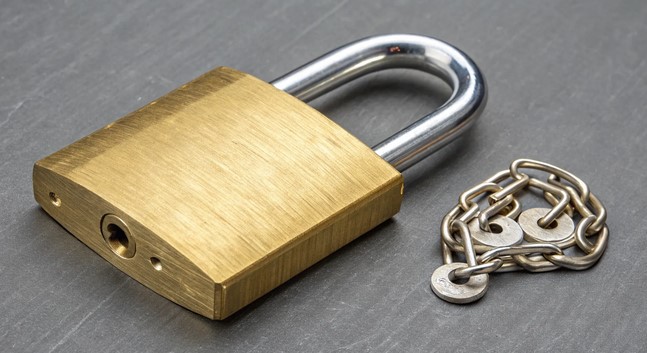
A few years ago, I received a panic call from a client who ran a commercial equipment yard. Overnight, thieves had hit their site, breaching a $5,000 perimeter fence in less than ten seconds. They did not pick the lock cylinder or hack the wireless security cameras—they simply walked up with a pair of 24-inch bolt cutters and snapped the cheap brass lock on the main tool vault like a dry twig.
When I arrived on site to inspect the damage, the severed lock lay on the concrete. The polished brass housing was completely pristine, but the standard mild-steel U-bar was sheared cleanly through.
In my over ten years of hands-on home improvement and security consulting, I see this exact failure point every single week. Homeowners spend thousands on heavy-duty sheds, reinforced hasps, and alarm systems, only to secure them with hardware that surrenders to basic hand tools. Real physical security starts and ends at a single crucial contact point: the padlock steel shackle.
The Metallurgy of Resistance: How a Padlock Steel Shackle Defeats Physical Attacks
To understand how a high-performance padlock steel shackle resists destruction, think of its inner structure like a loaf of artisan sourdough bread. It requires a rock-hard outer crust to deflect sharp teeth (hacksaws and bolt-cutter jaws) alongside a tough, flexible interior core to absorb heavy hammer blows without shattering.
If a metal bar is uniformly soft throughout, bolt cutters will crush and slice right through it. Conversely, if it is glass-hardened all the way to its center, a single hit from a three-pound sledgehammer will snap it in two.
Modern physical security engineering solves this through specialized heat-treatment processes and advanced metal alloys that balance outer surface hardness with internal tensile toughness.
+--------------------------------------------------------------------------+
|                  PADLOCK STEEL SHACKLE CROSS-SECTION                     |
+--------------------------------------------------------------------------+
|  [ Outer Case-Hardened Layer ]  --> High Rockwell Hardness (HRC 60+)     |
|                                     Deflects Saw Blades & Bolt Cutters    |
|                                                                          |
|    [ Ductile Inner Steel Core ] --> High Tensile Strength & Flexibility  |
|                                     Absorbs Kinetic Sledgehammer Shock   |
+--------------------------------------------------------------------------+
Decoding Metallurgy: Comparing Materials and Alloys
Selecting the right lock requires understanding what goes into the metal matrix. Not all steel alloys offer equal defense against mechanical cutting force.
| Material Alloy | Cut & Shear Resistance | Kinetic Shock Resistance | Corrosion Protection | Best Security Application |
| Standard Mild Steel | Very Low | High | Moderate (Plated) | Low-security indoors, gym lockers |
| Case-Hardened Carbon Steel | High | High | Moderate | Residential gates, outdoor sheds |
| Boron-Carbide Alloy | Extreme | High | High | High-risk commercial sites, tool vaults |
| Stainless Steel (304/316) | Moderate | Very High | Maximum | Marine environments, coastal gates |
Case-Hardened Carbon Steel
This remains the standard workhorse for high-quality residential locks. The outer surface is carbon-infused and heat-treated to achieve high Rockwell C Hardness (HRC), while the core remains ductile to prevent impact fractures.
Boron-Carbide Alloy
Boron alloyed steel represents top-tier security engineering. Adding boron to the steel matrix creates a metal structure up to 50% harder than standard case-hardened steel, offering formidable resistance against manual bolt cutters and angle grinders.
Geometry and Clearance: Mitigating Mechanical Leverage
Selecting a tough material is only half the battle; physical geometry dictates how easy or hard it is for an intruder to apply mechanical leverage. Attackers rarely spend time picking pin-tumbler lock cylinders in real-world break-ins—they exploit physical clearance gaps.
When a thief approaches a gate or storage door, they look for open space to insert pry bars, hydraulic spreaders, or large cutter jaws.
Exposed vs. Shrouded Padlock Steel Shackle Configurations
-
Open (Standard) Shackles: Feature an exposed U-shaped loop providing ample clearance for thick chains. While versatile, this wide loop leaves the metal completely exposed to bolt cutter jaws and saws.
-
Shrouded (Closed) Shackles: Feature raised metal shoulder guards built directly into the lock body housing. A shrouded padlock steel shackle exposes only a tiny fraction of metal, making it virtually impossible for bolt cutters to get a bite.
OPEN SHACKLE (Vulnerable to Cutters)      SHROUDED SHACKLE (Protected Geometry)
         /-------\                                    /---\
        |         |                                  |     |
     +--+---------+--+                            +--+-----+--+
     |   LOCK BODY   |                            | [SHROUD]  |
     +---------------+                            | LOCK BODY |
                                                  +-----------+
Dual Ball-Bearing Locking Mechanisms
Always avoid cheap padlocks that utilize a single spring-loaded latch lever. High-security padlocks employ a dual ball-locking mechanism, where two solid stainless steel ball bearings pull directly into deep notches on both sides of the shackle.
This mechanical design means an attacker must cut through both sides of the padlock steel shackle to open the lock, doubling the time and effort required to break in.
Expert Advice: Pro Tips and Hidden Warnings from a 10-Year Pro
Over a decade of field experience yields crucial safety insights that product packaging rarely explains:
Pro Tip: The Zero-Tool-Gap RuleAlways select a padlock steel shackle clearance length that leaves zero gap when closed against your hasp staple. If there is no open space left between the lock body, the hasp, and the shackle, an attacker cannot insert the tips of bolt cutters, pry bars, or chisel points.
-
Hidden Warning #1: The Brittle Hardness TrapBe cautious with cheap, unbranded locks labeled “super hardened” sold online. Manufacturers frequently over-harden low-grade steel to pass basic file tests, creating an extremely brittle bar that shatters instantly when struck with a punch or sprayed with cold aerosol refrigerant.
-
Hidden Warning #2: Galvanic Corrosion and SeizingInstalling a high-carbon padlock steel shackle directly onto a raw copper or brass fitting in wet weather creates a galvanic cell. Over time, micro-corrosion welds the internal locking notches to the ball bearings, seizing your lock completely from the inside.
Step-by-Step Security Protocol: Upgrading Your Perimeter
To build a reliable defense around your home or workspace, follow this practical checklist:
-
Inspect the Mounting Hasp: Verify that your mounting hasp features hardened steel construction and hidden mounting screw plates. A high-security lock mounted on a flimsy aluminum hasp is useless.
-
Measure the Hasp Eyelet: Select the thickest padlock steel shackle diameter your hasp will accommodate—ideally 3/8 inch (10mm) or larger for exterior perimeter security.
-
Upgrade to Shrouded Bodies: Choose a closed-shackle lock body design whenever your mounting clearance permits.
-
Maintain the Locking Mechanism: Apply a dry fluoropolymer or graphite lubricant into the shackle entry ports twice a year to prevent internal rust and moisture freeze-ups.
Fortify Your Property Line
True physical security is not about creating an unbreakable barrier; it is about engineering physical resistance that makes your property a noisy, time-consuming target for intruders. By selecting a high-grade padlock steel shackle, minimizing tool clearance, and pairing it with a shrouded body, you eliminate the easiest entry point for opportunistic break-ins.
What kind of security setup do you currently use to protect your outdoor shed, job site, or garage? Have you ever experienced a lock failure or had to upgrade your hardware? Share your thoughts or drop a question in the comments below—I read and reply to help you keep your home and assets rock-solid!

