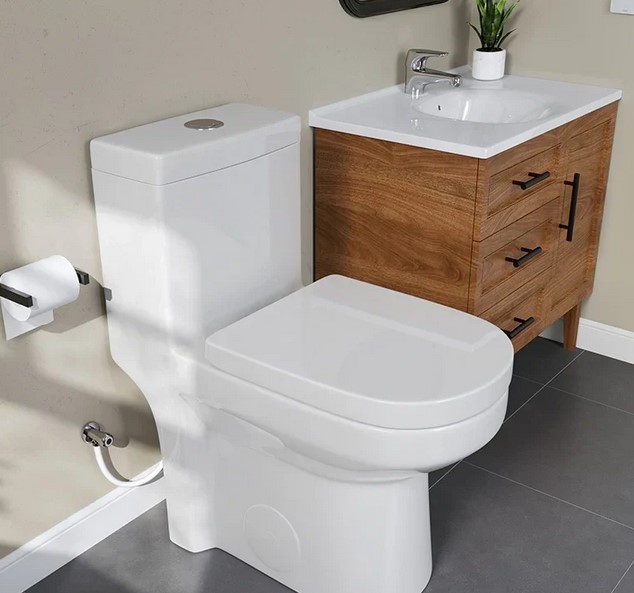
Every time you press that silver handle on your toilet, you are effectively dumping up to 3.5 gallons of pristine, drinkable water directly into the sewer. Now, imagine doing that twenty times a day. In an average household, the toilet accounts for nearly 30% of total indoor water consumption. That is a staggering amount of “resource leakage” that most homeowners simply accept as the cost of living. But what if you could cut that specific utility cost by 50% without replacing your entire porcelain throne?
In my ten years of performing energy audits and high-efficiency plumbing retrofits, I have crawled behind more tanks than I care to count. I have seen people try the “brick in the tank” trick—which usually just ends up eroding and ruining the flush valve—and I’ve seen them ignore slow leaks that waste 200 gallons a day. The single most effective “surgical” upgrade I recommend for anyone serious about sustainable facility management is the Dual Flush Kit. It is the most underrated tool in the green home movement, turning a “dumb” appliance into a precision instrument.
The Physics of the Flush: Why One Size Doesn’t Fit All
To understand why a Dual Flush Kit is necessary, we have to look at the “Liquid vs. Solid” logic of waste management. A traditional toilet is like a freight train—it uses the same massive amount of energy to move a single passenger as it does to move a full load of cargo. It’s inherently inefficient because it doesn’t offer a “low-gear” option.
A dual-flush system introduces a two-stage logic:
-
The Half Flush: Optimized for liquid waste, using roughly 0.8 to 1.1 gallons.
-
The Full Flush: Reserved for solid waste, utilizing the full 1.6 (or more) gallons.
By implementing this binary choice, you are effectively “right-sizing” your water usage for every single visit. In professional facility maintenance, we call this operational scaling. You aren’t sacrificing performance; you are simply eliminating the “over-spec” waste that occurs during 80% of your bathroom trips.
Technical Deep-Dive: Anatomy of the Dual Flush Kit
For the beginner and intermediate DIYer, the prospect of taking apart a toilet tank can be intimidating. However, modern Dual Flush Kit designs are remarkably “plug-and-play.” Most kits consist of two primary components: the Digital/Manual Dual Action Valve and the Adjustable Fill Valve.
1. The Dual Action Flush Valve
This replaces your traditional flapper. Instead of a simple rubber flap that stays open until the tank is empty, the dual-flush valve uses a weight-sensitive or timed release. It creates a “siphon jet” effect that clears the bowl with velocity rather than just volume.
2. The Overflow Tube Integration
Most kits fit directly over your existing overflow tube. This is a critical data point: you don’t necessarily have to remove the “tank-to-bowl” bolts (the most common place for leaks to start) to install a high-quality retrofit kit.
3. Silicone Seal Technology
I always tell my clients to look for kits that use silicone seals rather than standard rubber. Rubber degrades in the presence of chlorine and “drop-in” tank cleaners, leading to “ghost flushing.” Silicone is chemically inert and maintains a watertight seal for up to ten years.
Step-by-Step Implementation: The Expert’s Protocol
In my decade of experience, the difference between a successful install and a “flooded floor” is all in the preparation. If you are ready to tackle this, follow my professional sequence:
-
Audit Your Tank: Measure the diameter of your current flush valve (usually 2 or 3 inches). Buying the wrong size Dual Flush Kit is the #1 reason for project delays.
-
Isolate the Water: Shut off the supply valve and flush until the tank is empty. Use a sponge to soak up the remaining half-inch of water—you want a bone-dry environment.
-
Remove the Old “Train”: Take out the old flapper and the handle. These are the “legacy parts” that are holding back your efficiency.
-
Calibrate the “Half-Flush” Float: This is where the magic happens. You can adjust how much water is released during the liquid flush. I usually set this to the lowest possible setting that still clears the bowl.
Managing Resource Efficiency: The Numbers Don’t Lie
Let’s look at the “Return on Investment” (ROI). A standard Dual Flush Kit costs between $25 and $40. In a household of four, the water savings usually pay for the kit in less than six months.
From a Resource Efficiency standpoint, you are saving approximately 15,000 gallons of water per year. That isn’t just a lower bill; it’s a reduced load on your local municipal water treatment facility and a smaller footprint on your regional watershed. In the world of sustainable home improvement, we call this a “passive win.”
Tips Pro: The “Handle-Tension” Warning
Most beginners over-tighten the new dual-flush button. If the cable or rod is too tight, the valve won’t seal properly, and you’ll have a “silent leak” that defeats the entire purpose of the upgrade. Always ensure there is about 1/16th of an inch of “slack” or “play” in the button before it engages the valve.
Beyond the Kit: Synergizing Your Plumbing Infrastructure
If you are moving into the “Intermediate” category, don’t stop at the Dual Flush Kit. To maximize your Resource Efficiency, you should look at the entire “loop.”
-
Pressure-Assisted Logic: Check if your home has high static water pressure. If your pressure is above 60 PSI, you might be over-filling your tank too fast, which leads to turbulence and poor seals. A pressure-reducing valve is the perfect companion to a new flush kit.
-
Leak Detection Tablets: Once your kit is installed, drop a blue dye tablet into the tank. If blue water shows up in the bowl without flushing, your seal isn’t seated correctly. Precision is everything in water management.
Sustainable water management doesn’t require a lifestyle overhaul or a five-figure plumbing bill. It starts with a 30-minute Saturday project and a $30 Dual Flush Kit. By taking control of the most water-intensive appliance in your home, you move from being a passive consumer to an active steward of your local resources.
You are no longer dumping drinkable water down the drain; you are using exactly what is needed, and not a drop more.
Have you checked your toilet tank lately? Is it still running on “legacy” hardware, or are you ready to scale your home’s efficiency? Drop a comment below if you have questions about your specific tank model—I’ve seen them all, and I’d love to help you make the switch to a smarter, greener flush!
Would you like me to walk you through a specific “troubleshooting” guide for older 3.5-gallon tanks or perhaps discuss the best water-saving showerhead pairings?


