You’ve just finished a heavy-duty bathroom scrub, the tiles are sparkling, but your eyes are stinging and your throat feels like you’ve swallowed a desert’s worth of sand. Those “industrial strength” fumes lingering in the air aren’t just the smell of clean—they are a cocktail of volatile organic compounds (VOCs) that can linger in your home’s ecosystem for hours. According to some environmental studies, the air quality inside a freshly cleaned home can sometimes be worse than the air in a smog-filled city center.
In my ten years of managing high-end residential facilities and navigating the gritty world of post-construction cleanup, I’ve had a massive change of heart. I used to reach for the strongest blue or green liquids the chemical aisle offered. However, after seeing how these harsh agents etched delicate marble and degraded rubber seals over time, I pivoted. I discovered that the most powerful weapon in my maintenance arsenal wasn’t a laboratory concoction, but a simple, fermented liquid: Natural Cleaning Vinegar.
The Chemistry of Clean: Why Acidity is Your Best Friend
To understand why Natural Cleaning Vinegar is so effective, we have to look at its molecular structure. Vinegar is essentially a dilute solution of acetic acid. Think of acetic acid as a microscopic set of teeth. It doesn’t just sit on a surface; it actively “bites” into alkaline deposits—like the chalky white limescale on your faucets or the stubborn soap scum on your glass shower doors.
Most household dirt is either grease (which needs a base) or mineral buildup (which needs an acid). When you apply vinegar to a mineral deposit, a chemical reaction occurs that dissolves the calcium carbonate, turning it into a liquid state that you can simply wipe away. It’s the ultimate “passive” cleaner; you let the acidity do the heavy lifting while you grab a cup of coffee.
The Concentration Factor: 5% vs. 6% vs. 20%
For the intermediate facility manager or DIY enthusiast, the most important technical data point is the concentration level. Not all vinegar is created equal, and using the wrong one can either be a waste of time or a risk to your surfaces.
-
Culinary Vinegar (5% Acidity): This is what you find in the salad dressing aisle. While it works in a pinch, it’s often too diluted for heavy-duty facility protocols.
-
Natural Cleaning Vinegar (6% Acidity): This is the “sweet spot” for home maintenance. That extra 1% of acidity makes it 20% stronger than grocery store vinegar, providing enough punch for daily disinfecting and degreasing.
-
Industrial Vinegar (20% – 30% Acidity): This is a powerful herbicide and industrial descaler. Warning: At this level, it is a hazardous substance. It will burn your skin and permanently etch stone or metal if not handled with professional-grade PPE (Personal Protective Equipment).
Strategic Protocols: Implementing Vinegar Across the Facility
In my decade of practice, I’ve developed specific “Sustainable Facility Protocols” that integrate Natural Cleaning Vinegar into the weekly maintenance cycle. Here is how you scale your eco-friendly efforts:
1. Hard Water Descaling
If you live in an area with hard water, your dishwasher and laundry machines are under constant attack from mineral buildup. Once a month, I run an empty cycle with two cups of vinegar. It clears the internal heating elements and prevents the “calcification” that leads to appliance burnout. It’s like a cardiovascular flush for your home’s plumbing.
2. Glass and Reflective Surface Polishing
Forget the streak-heavy blue sprays. A 50/50 mix of distilled water and vinegar is the professional standard for high-streak areas. The acid prevents the “fogging” effect often caused by the waxy buildup found in commercial cleaners.
3. Odor Neutralization (Not Just Masking)
Most air fresheners just cover up smells with a heavy scent. Vinegar is a natural deodorizer. When it evaporates, it carries away odors trapped in the air. I’ve used bowls of vinegar to clear out the smell of fresh paint or burnt popcorn in record time.
Technical Limitations: When to Put the Vinegar Away
As an expert, I have to be candid: vinegar is an acid, and acids can be destructive. This is where most “natural cleaning” blogs lead you astray.
-
Stone Surfaces: Never, ever use Natural Cleaning Vinegar on granite, marble, or limestone. The acid will cause “etching”—a permanent dulling of the stone’s surface that requires professional diamond-polishing to fix.
-
Electronic Screens: The protective coatings on your smartphones and laptops are sensitive to acids. Stick to specialized electronic cleaners.
-
Hardwood Floors: While some people swear by it, I’ve seen vinegar strip the protective wax or polyurethane finish over time, leaving the wood vulnerable to moisture.
Tips Pro: The “Double-Threat” Myth
One of the most common mistakes I see beginners make is mixing vinegar with baking soda in a bottle, thinking they are making a “super cleaner.” Chemistry 101: Vinegar (acid) plus Baking Soda (base) creates a reaction that produces water and carbon dioxide. While the fizzing is great for unclogging a drain mechanically, as a surface cleaner, you’ve just made expensive, salty water. Use them sequentially, not together!
Enhancing the Experience: Infusions and Essential Oils
Let’s be honest: the smell of a fish-and-chip shop isn’t exactly the “spa vibe” most people want for their home. To make your Natural Cleaning Vinegar more palatable for indoor use, I recommend citrus infusions.
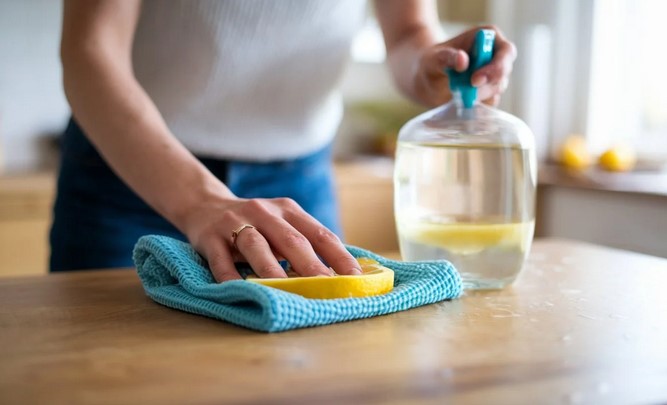
Take your orange or lemon peels, put them in a mason jar, cover them with vinegar, and let it sit for two weeks. The acetic acid extracts the limonene—a natural degreaser—from the peels. You end up with a cleaner that has extra “bite” for kitchen grease and a refreshing scent that doesn’t scream “salad dressing.”
Scannable Checklist: Your Eco-Friendly Maintenance Kit
-
Base Asset: 1 Gallon of Natural Cleaning Vinegar (6% concentration).
-
Dilution Tool: A high-quality, BPA-free spray bottle with an adjustable nozzle.
-
LSI Enhancers: Distilled water (to prevent new mineral spots) and tea tree oil (for added antifungal properties).
-
Applicators: Microfiber cloths or recycled cotton rags—never use steel wool with vinegar, as it can cause a corrosive reaction.
Conclusion: A Greener Path to a Cleaner Home
Transitioning to sustainable facility protocols isn’t about sacrificing power; it’s about working smarter with the chemistry of nature. By embracing Natural Cleaning Vinegar, you are reducing the toxic load on your family, protecting your appliances from mineral death, and saving a significant amount of money on overpriced chemical “solutions.”
Maintenance should be about preserving your home, not just cleaning it. When you switch to eco-friendly protocols, you’re ensuring that your home remains a sanctuary for both your family and the planet.
What’s the toughest cleaning challenge in your house right now? Is it a lime-scaled shower head or a funky-smelling dishwasher? Drop a comment below—I’d love to help you mix the perfect vinegar-based solution for your specific maintenance hurdle!
Would you like me to dive deeper into how to safely descale a tankless water heater with vinegar, or perhaps share my recipe for an all-natural wood polish?
