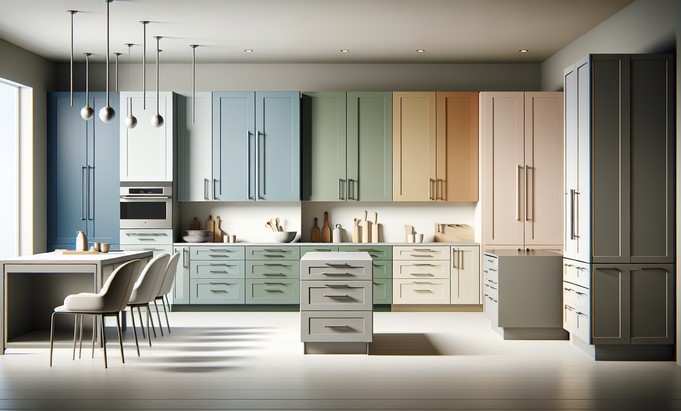
I’ve stood in hundreds of kitchens over the last decade, and I can tell you the exact moment a homeowner feels “renovation paralysis.” It usually happens right in front of a wall of cabinet samples. They look at the ornate, heavy carvings of the early 2000s and then at the ultra-minimalist “slab” doors that look like they belong in a laboratory.
The struggle is real: how do you choose something that looks high-end today but won’t feel like a dated mistake in five years? In my years of swinging hammers and managing installs, I’ve found that Shaker Cabinets are the ultimate “cheat code” for home value. They are the white t-shirt and well-fitted jeans of the design world—effortlessly stylish, incredibly versatile, and always appropriate.
Why Shaker Cabinets Remain the Industry Gold Standard
To understand why these cabinets are a “value asset,” we have to look at their DNA. Named after the Shaker religious community of the 18th century, the design was born from a philosophy of utility and honesty. There are no faux carvings or hidden dust-collecting grooves here.
A standard Shaker door consists of a five-piece structure: a recessed center panel surrounded by four pieces known as stiles (vertical) and rails (horizontal). I often describe this to my clients as a “picture frame” for your kitchen. This simplicity is exactly why they work in a farmhouse in the countryside just as well as a high-rise loft in the city.
From a technical standpoint, this five-piece construction is brilliant for durability. Because wood naturally expands and contracts with humidity, the floating center panel in a Shaker door allows for this movement without warping the entire frame. It’s a marriage of 18th-century engineering and 21st-century aesthetics.
The ROI Factor: Why Appraisers Love the Shaker Look
When you invest in cabinetry, you aren’t just buying boxes to hold your plates; you are investing in “fixed equity.” In my experience, Shaker cabinets offer one of the highest Returns on Investment (ROI) because they eliminate “buyer friction.”
Think of it this way: if you install bright purple Victorian-style cabinets, you’ve narrowed your pool of future buyers to about three people. But Shaker Cabinets are a blank canvas. They appeal to the widest possible demographic. Real estate appraisers often look for “timeless finishes” when valuing a kitchen remodel, and Shaker doors hit that mark every single time.
Key Value Drivers:
-
Adaptability: You can change the entire “vibe” of the room just by swapping the hardware (handles and knobs).
-
Repairability: Unlike complex raised panels, if a Shaker rail gets dinged, it’s significantly easier to sand, fill, and paint.
-
Cost-Efficiency: Because the design is streamlined, manufacturers can produce high-quality versions at a more accessible price point than ornate custom millwork.
Technical Deep Dive: Materials and Construction Methods
If you’re a beginner, you might think all Shaker doors are created equal. They aren’t. As someone who has had to replace “cheap” cabinets after only three years, I want you to look under the hood.
1. Solid Wood vs. MDF (Medium Density Fiberboard)
For a stained finish where you want to see the wood grain, Solid Maple or Cherry is the gold standard. However, if you are planning on painted Shaker cabinets (like the popular Navy or Forest Green), I actually recommend a high-grade MDF center panel.
Why? Because solid wood panels move. Over time, this movement can cause the paint to “check” or crack at the joints. MDF is incredibly stable and provides a glass-smooth surface for paint that won’t crack when the seasons change.
2. Joint Construction: Mortise and Tenon
In the world of cabinetry, the way the stiles and rails meet is everything. Look for Mortise and Tenon joints. This is a traditional woodworking technique where a “tongue” (tenon) fits into a “hole” (mortise). It provides a massive amount of surface area for glue, making the door nearly indestructible.
3. Overlay Options
This is where the “look” of your modernization happens.
-
Full Overlay: The door covers almost the entire cabinet frame. This creates a sleek, modern, and seamless look.
-
Inset: The door sits inside the cabinet frame. This is a premium, “furniture-grade” look that screams custom luxury, though it does require more precise installation.
Tailoring the Aesthetic: From Farmhouse to Ultra-Modern
One mistake I see homeowners make is thinking Shaker cabinets are “boring.” That’s like saying a canvas is boring before the artist touches it. Here is how I coach my clients to customize their cabinetry assets:
The Modern Minimalist:
Pair white Shaker cabinets with matte black, extra-long finger pulls and a quartz waterfall countertop. The clean lines of the cabinets will emphasize the geometry of the room.
The Transitional Warmth:
Go with a “Slim Shaker” (a version with narrower stiles and rails) in a light oak stain. Use brushed brass hardware to bridge the gap between traditional materials and modern silhouettes.
The Bold Professional:
Try a deep “Iron Ore” or charcoal paint on the lowers with open shelving on top. The Shaker profile provides enough shadow lines to keep the dark color from looking flat or “heavy.”
Pro Tip: The “Two-Finger” Rule
When choosing hardware for your Shaker doors, make sure the “projection” (the distance the handle sticks out) allows for at least two fingers to fit comfortably. Because Shaker panels are recessed, shallow hardware can make it feel cramped and difficult to open, especially if you have larger hands or are wearing oven mitts.
Hidden Warnings: What the Showroom Won’t Tell You
I’ve seen many “DIY-gone-wrong” scenarios, and most could have been avoided with two pieces of advice:
Beware of the “Dust Ledge”: The 90-degree angle where the center panel meets the rail is a natural shelf for flour, dust, and pet hair. If you aren’t someone who likes to wipe down surfaces weekly, look for a “Beveled Shaker” or “Slanted Shaker.” These have a slight 45-degree angle that allows dust to slide off and makes cleaning a breeze.
Paint Quality Matters: If you are buying pre-painted cabinets, ask about the finish. You want a Conversion Varnish. It’s a chemical-cure finish that is much harder and more water-resistant than the standard latex paint you find at a hardware store. In a kitchen, where steam and grease are constant, a cheap paint job on a Shaker door will peel within two years.
Modernizing for the Long Haul
Modernizing your home isn’t about chasing the latest TikTok trend; it’s about making smart architectural choices that stand the test of time. Shaker cabinets provide a structural honesty that is rare in modern manufacturing. They don’t pretend to be something they aren’t.
By choosing high-quality materials, focusing on solid joinery, and picking a hardware style that reflects your personality, you are doing more than “fixing up” a kitchen. You are defining the value of your home for the next generation.
Are you planning a kitchen refresh or a full-scale remodel?
Choosing the right cabinetry is the biggest decision you’ll make for your interior. If you have questions about specific wood species or want to know which hardware finishes are trending for 2026, let’s discuss them in the comments below! I’d love to help you navigate your next home improvement journey.
