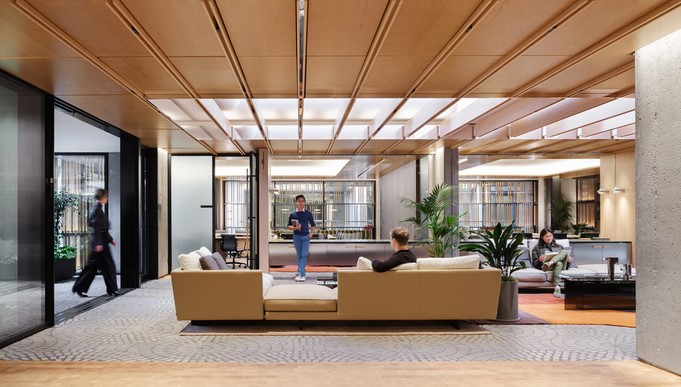
You walk into a high-end boutique hotel or a minimalist executive office, and immediately, the room feels “expensive.” It isn’t just the furniture or the lighting; it’s the walls. They aren’t flat, lifeless planes of drywall. Instead, they have a rhythmic, organic pulse created by vertical lines of timber that seem to stretch the ceiling to infinity. This isn’t a million-dollar structural overhaul—it’s the transformative power of the Wood Wall Slat.
In my ten years of redesigning residential interiors and commercial facilities, I’ve seen homeowners spend thousands on “statement” art, only to have it disappear against a boring, flat background. I remember a project for a client who had a living room that felt like a cold, cavernous box. By installing a precision-aligned Wood Wall Slat feature behind their media console, we didn’t just add a “decoration”; we changed the room’s entire DNA. It became warm, acoustically balanced, and architecturally intentional.
The Physics of Depth: Why Verticality Works
To understand why a Wood Wall Slat system is so effective, we have to look at Visual Pathing. Human eyes love patterns. When you place repeated vertical lines on a wall, you are essentially creating a “visual ladder” that forces the eye to travel upward, making even a standard 8-foot ceiling feel like a soaring loft.
Think of wood slats like the pinstripes on a tailored suit. Just as vertical stripes make a person look taller and more streamlined, slats give a room a sense of “architectural fitness.” They break up the monotony of a flat surface by introducing Shadow Play. As the light in your room changes throughout the day, the depth of the slats creates shifting shadows that make the wall feel like a living, breathing entity.
Technical Anatomy: Materials and Slat Geometry
For the beginner and intermediate DIYer, the success of a Wood Wall Slat project depends on selecting the right “species” and understanding the math of the gap.
1. Material Selection (The DNA of the Wall)
-
Solid Hardwood (Oak, Walnut, Teak): The gold standard. These offer the most authentic grain and “heft.” However, they are heavy and can be prone to slight warping if your home’s humidity isn’t controlled.
-
MDF with Wood Veneer: This is the “secret weapon” for many pros. Because the core is engineered, it stays perfectly straight. You get the high-end look of Walnut without the risk of the “banana curve” common in natural timber.
-
Acoustic-Backed Slats: Many modern systems come pre-mounted on a 9mm felt backing made from recycled PET. This is a game-changer for facility maintenance because it provides instant Acoustic Absorption.
2. The Ratio Rule
The most common mistake I see is getting the spacing wrong. For a balanced, high-end look, I recommend a 1:1 or 2:1 ratio. If your slats are 1 inch wide, your gap should be roughly 1/2 inch to 1 inch. Any wider, and the wall starts to look like a picket fence rather than a sophisticated architectural feature.
Precision Installation: The Professional Protocol
In my decade of experience, the difference between a “DIY project” and “Architectural Integration” is the quality of the finish and the straightness of the first line.
-
The Anchor Line: Your house is not square. If you align your first Wood Wall Slat to a corner or a door frame, the whole wall will eventually look tilted. Use a Laser Level to project a perfectly vertical “plumb line” in the center of the wall and work outward.
-
Substrate Preparation: Paint the wall behind the slats a dark, matte color (usually charcoal or black) before installation. This makes the shadows between the slats pop and hides any imperfections in the drywall.
-
Mechanical vs. Adhesive Fastening: For a permanent install, I use a combination of High-Tack Construction Adhesive and a 18-gauge brad nailer. The nails hold the slat in place while the glue sets, ensuring the timber never “creeps” or sags over time.
Improving Facility Performance: The Acoustic Advantage
One of the “hidden” technical data points of the Wood Wall Slat is its impact on Sound Diffusion. Flat walls act like mirrors for sound, bouncing noise back and forth (echo). The irregular surface of the slats breaks up these sound waves.
If you are setting up a home office or a home theater, slats aren’t just an aesthetic choice—they are an Acoustic Treatment. By introducing different “depths” for the sound to hit, you reduce the “reverb time” of the room, making voices clearer and music richer. In professional facility design, we call this “Diffusion-Absorption Synergy.”
Tips Pro: The “Shadow Gap” Warning
Never run your slats directly into the floor or the ceiling. Leave a 1/4-inch Shadow Gap at the top and bottom. Houses expand and contract with the seasons; if your slats are jammed tight against the floor, the pressure from the house settling can cause the slats to buckle or pop off the wall. Plus, that tiny gap creates a much more professional, “floating” aesthetic.
Scannable Checklist for a Successful Slat Project:
-
Acclimatization: Let the wood sit in the room for 48–72 hours before installation to reach “Equilibrium Moisture Content.”
-
Finishing: Apply a UV-Protective Clear Coat or hard-wax oil before mounting. Trying to stain slats once they are on the wall is a nightmare of drips and uneven patches.
-
Electrical Integration: Plan for your outlets. Use “Box Extenders” so your electrical sockets sit flush with the front of the slats, rather than being buried 1 inch deep.
-
Hardware: Use black-headed screws or hide your brad nails in the “side grain” of the slat for a fastener-free look.
Maintenance and Long-Term Durability
Unlike wallpaper, which peels, or paint, which scuffs, a Wood Wall Slat system is a high-durability asset. To keep it in “Executive” condition:
-
Dusting: Use a vacuum with a soft brush attachment once a month. Dust buildup in the gaps can dull the “Shadow Play” effect.
-
Humidity Control: Keep your indoor humidity between 35% and 55%. This prevents the wood from shrinking (creating gaps at the joints) or expanding (warping).
-
Oil Refresh: If using natural hardwood, a light application of lemon oil or furniture wax every two years will keep the grain “popping.”
Modern architecture is no longer about just “filling a space”; it’s about creating Interior Depth. By utilizing the Wood Wall Slat, you are moving beyond two-dimensional decorating and into three-dimensional design. You are adding warmth, improving acoustics, and creating a focal point that commands attention without saying a word.
Stop living with flat walls. It’s time to add the texture and rhythm that your home deserves.
What part of your home feels the most “one-dimensional” right now? Is it the hallway, the bedroom headboard wall, or perhaps your home office? Drop a comment below—I’d love to help you calculate the slat-to-gap ratio for your specific wall dimensions!
Would you like me to dive deeper into how to integrate LED “channel lighting” between your slats, or perhaps discuss the best wood species for high-humidity areas like bathrooms?
