With the increasing popularity of alfresco dining and outdoor entertaining, more homeowners are transforming their backyards into stylish and functional outdoor cooking spaces. Whether you’re grilling up a family meal, hosting a weekend barbecue, or simply enjoying a quiet dinner under the stars, a well-designed outdoor kitchen can significantly enhance your outdoor living experience. Outdoor cooking spaces combine the joy of cooking with the freedom of being outdoors, allowing you to entertain guests, create delicious meals, and enjoy nature all at once.
Designing an outdoor kitchen is not only about aesthetics—it’s also about creating a functional, durable, and efficient cooking environment that suits your needs. From choosing the right appliances to organizing cooking zones, there are many elements to consider when planning your ideal outdoor cooking space. This article will explore key factors to keep in mind while designing a perfect outdoor kitchen that is both practical and stylish.
1. Determine the Layout and Functionality
Before diving into the specifics of appliances and materials, the first step in creating the perfect outdoor cooking space is to consider the layout and functionality. You want to design a space that will be convenient to use, aesthetically pleasing, and efficient.
a. Work Zones and Flow
Just like an indoor kitchen, an outdoor kitchen should be divided into distinct work zones for easy flow and accessibility. Common zones to include are:
- Cooking Zone: This area is where the main cooking appliances—grills, stoves, ovens, or smokers—are located. It should be positioned in a way that is convenient to both the food prep area and the dining area.
- Preparation Zone: You’ll need plenty of counter space for chopping, mixing, and assembling dishes. Consider a large countertop near the cooking station for easy access to ingredients and tools.
- Storage Zone: Since outdoor kitchens are typically exposed to the elements, storage is crucial. Cabinets or shelves for utensils, spices, and cleaning supplies help keep things organized.
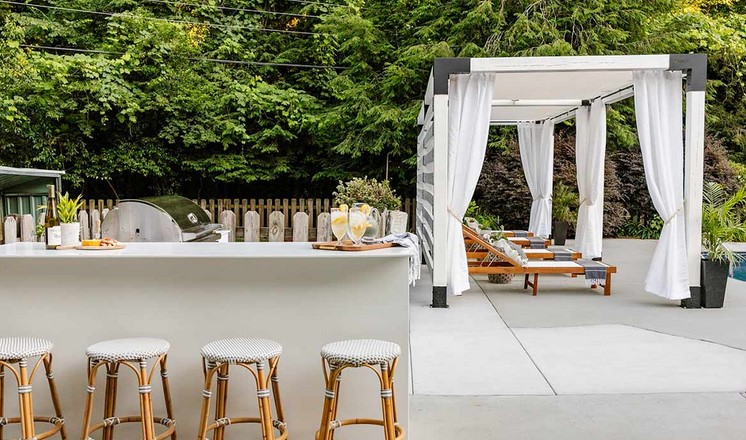
- Serving Area: A dedicated serving area or bar can make it easy to plate and serve dishes while socializing with guests.
The key to designing your layout is making sure the zones flow logically, minimizing unnecessary movement between tasks. Think about the natural path you’d take from prepping food to cooking and then serving.
b. Consider Access and Safety
Your outdoor kitchen should be conveniently located within your backyard space, typically near your indoor kitchen to facilitate easy food transfer. It’s also important to make sure the area is easily accessible for both you and your guests. A well-designed outdoor kitchen should also incorporate safety features such as proper ventilation, clear space around cooking appliances, and a safe distance from combustible materials.
2. Select the Right Appliances for Your Needs
The choice of appliances is crucial in any outdoor cooking space. When designing an outdoor kitchen, you’ll want to choose high-quality, durable appliances that can withstand the elements and provide the performance you need. The appliances you select should also be suited to the type of cooking you enjoy most. Here are some popular options for outdoor cooking:
a. Grills
A grill is a cornerstone of most outdoor cooking spaces. Whether you prefer a traditional charcoal grill, a gas grill, or a more advanced pellet grill, there are various options to suit your cooking style. When selecting a grill, consider the following:
- Size: Choose a grill large enough to accommodate the number of people you typically entertain. Larger families or those who love to entertain may want a built-in or oversized grill.
- Fuel Type: Gas, charcoal, and electric grills all have their benefits. Gas grills are convenient and offer precise temperature control, while charcoal grills provide a smoky flavor. Pellet grills offer a blend of convenience and flavor, with the added benefit of using wood pellets for smoke.
b. Outdoor Ovens and Pizza Ovens
For those who enjoy baking or roasting, a built-in outdoor oven is a great addition to any outdoor kitchen. You can opt for a traditional wall oven or a specialized pizza oven for that authentic, wood-fired pizza experience. Outdoor ovens are also ideal for baking bread, roasting vegetables, and preparing a wide variety of dishes.
c. Refrigeration
Just because you’re cooking outdoors doesn’t mean you have to sacrifice convenience. Adding an outdoor refrigerator or beverage cooler can help keep ingredients fresh and drinks cold without running back to the indoor kitchen every time you need something. Consider a compact fridge or under-counter refrigerator that is weatherproof and easy to access.
d. Side Burners and Smokers
For those who love to cook with various techniques, adding side burners or smokers to your outdoor kitchen can elevate your cooking experience. Side burners are great for boiling, frying, or simmering sauces, while smokers allow you to cook meats and vegetables with a deep, smoky flavor.
3. Choose Durable Materials and Weather-Proof Features
Outdoor kitchens are exposed to the elements, so selecting durable, weather-resistant materials is crucial for longevity and low-maintenance upkeep. The materials you choose should be able to withstand exposure to rain, sun, and wind without deteriorating. Consider the following options for different areas of your kitchen:
a. Countertops
When choosing countertops for your outdoor cooking space, select materials that are both durable and easy to clean. Popular choices include:
- Granite: A classic, durable option that resists heat, stains, and scratches. It also offers a luxurious look.
- Concrete: This material can be customized with colors and textures to match your design. It’s highly durable and heat-resistant.
- Stainless Steel: A modern, sleek option that pairs well with appliances and resists corrosion from weather elements. Stainless steel is easy to maintain and clean.
b. Cabinets and Storage
For the cabinetry in your outdoor kitchen, choose materials like marine-grade stainless steel or weatherproof wood like teak. These materials can withstand moisture and are resistant to fading from sunlight. Cabinets and drawers should be designed to handle outdoor conditions, and it’s a good idea to choose weatherproof seals to prevent water damage.
c. Flooring
Outdoor kitchen flooring should be both stylish and practical. Non-slip surfaces are important for safety, especially when grilling or handling hot items. Options like textured concrete, flagstone, tile, or composite decking are all popular choices for outdoor kitchens. Consider how easy the material is to clean, as spills and grease are inevitable when cooking outdoors.
d. Lighting and Heating
Since outdoor cooking can extend into the evening, it’s important to incorporate proper lighting. Install task lighting around the cooking and prep areas, as well as ambient lighting to set the mood during social gatherings. Additionally, heating options such as outdoor fireplaces or patio heaters can extend the usability of your outdoor kitchen during cooler months.
Designing the perfect outdoor kitchen involves creating a space that’s not only functional but also an extension of your indoor living area. Outdoor cooking spaces provide an ideal setting for entertaining, cooking, and enjoying the outdoors with family and friends. By focusing on a logical layout, selecting durable appliances, and using weather-resistant materials, you can create an outdoor kitchen that will withstand the elements and provide years of enjoyment. With the right planning and investment in quality features, your backyard can become a true culinary haven that enhances your outdoor living experience. Whether you’re grilling, baking, or simply enjoying a meal under the stars, an outdoor kitchen is a perfect way to bring the joy of cooking into your backyard.